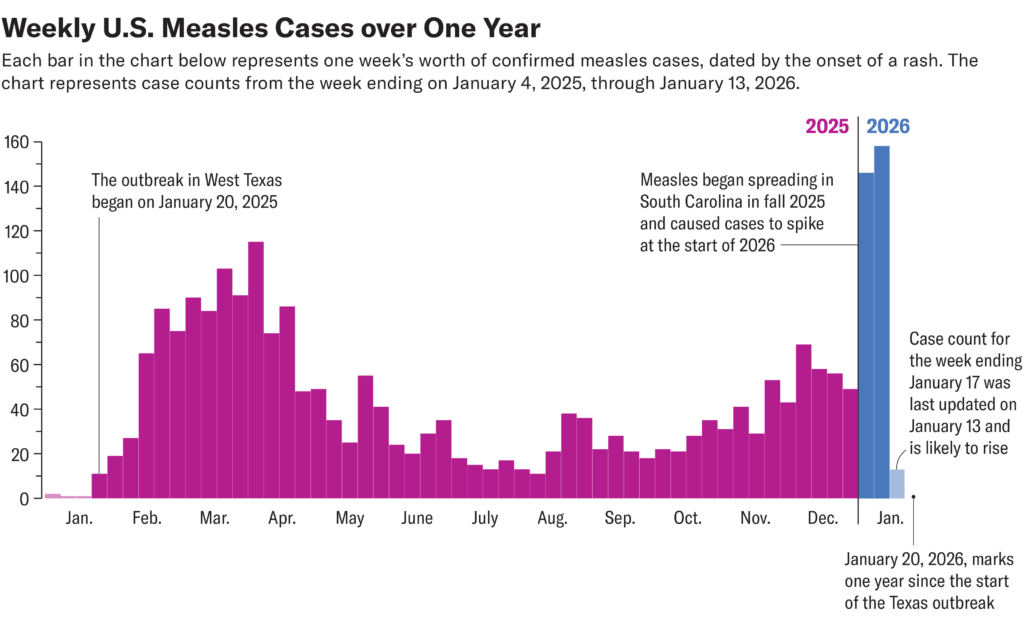
The United States has reported over 1,100 measles cases in the first two months of 2026, according to CDC updates as of late February. This figure exceeds six times the typical annual average, with outbreaks concentrated in states like South Carolina, Texas, and others, primarily affecting unvaccinated children and teens. Following nearly 2,300 cases last year—the highest since 1991—this trend underscores the critical need for vigilance and proactive measures.
Three Proven Ways to Prevent Measles
Vaccination remains the most effective defense against measles, a highly contagious virus spread through the air.
- Prioritize MMR Vaccination: The MMR vaccine provides 97% protection with two doses (given at 12-15 months and 4-6 years for children) and 93% with one dose. Adults without proof of immunity should get vaccinated or tested.
- Maintain Strict Hygiene: Wash hands thoroughly with soap, cover coughs and sneezes, and avoid crowded indoor areas during outbreaks, as the virus can linger in the air for hours.
- Act Swiftly on Exposure: If exposed to a case, consult a doctor immediately for post-exposure vaccination within 72 hours or immune globulin for high-risk individuals.
These steps align with CDC recommendations to build community immunity.
Common Measles Symptoms
Measles symptoms appear 7-14 days after exposure and progress in stages.
- Initial phase (prodrome): High fever (often 104°F or higher), persistent cough, runny nose, and red, watery eyes lasting 3-5 days.
- Distinctive signs: White spots inside the mouth (Koplik spots) and a red rash starting on the face, spreading to the body and limbs over 3-4 days.
- Potential complications: Ear infections, pneumonia, encephalitis (in 1 per 1,000 cases), or death (1-3 per 1,000 reported cases).
Early recognition helps prevent spread.
What to Do During a Measles Outbreak (U.S. Guidelines)
U.S. public health standards emphasize rapid isolation and reporting to contain outbreaks.
CDC protocols ensure efficient response, protecting vulnerable populations.
Staying informed empowers families to act. Consult healthcare providers for tailored advice—vaccination is the gold standard for prevention.
Sources:
- U.S. Tops 1,100 Measles Cases This Year as Outbreaks Grow
- The US surpassed 1,100 measles cases in two months. Expect more deaths next
- How to Prevent Measles: 6 Practical Tips From Healthcare Experts
- About Measles-CDC
- Clinical Overview of Measles-CDC
- Measles : Rash, Symptoms and Causes, Treatment & Prevent
- Confirming, investigating and managing an outbreak