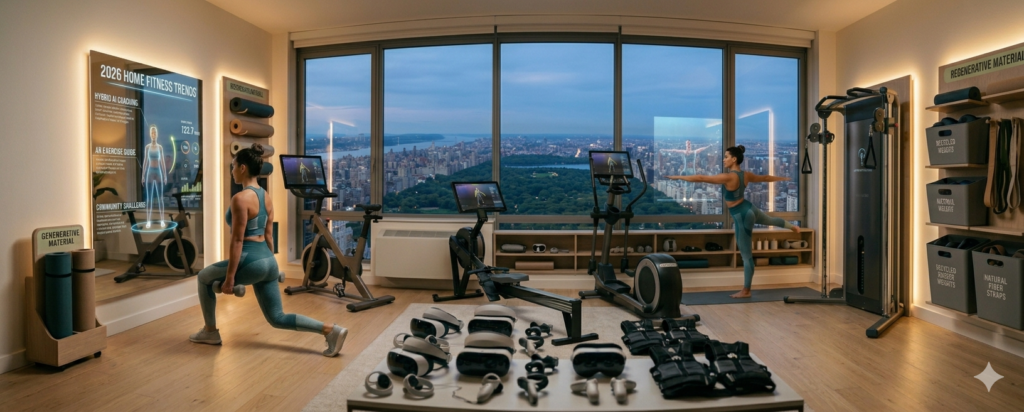
Americans are redefining what “fitness” looks like—and by 2026, the home has become the central hub for movement, recovery, and wellness. The latest trends are not just about buying new gadgets; they represent a shift in how U.S. adults manage cardiovascular risk, metabolic health, and mental resilience on a daily basis. Below are the 3–5 dominant home‑fitness trends of 2026, analyzed through the lens of exercise science, behavior change, and long‑term health outcomes.
1. AI‑Driven Smart Home Gyms
Smart mirrors, compact studio‑style rigs, and AI‑equipped cameras now analyze posture, range of motion, and exertion in real time. These systems use machine‑learning models trained on biomechanical data to flag risky form, adjust resistance, and personalize load so each session stays within a safe, effective training zone. Market research from the Consumer Technology Association indicates that AI‑fitness hardware grew by roughly a third between 2024 and 2025, with the largest uptake among adults aged 25–49.
From a clinical standpoint, this kind of feedback can reduce the risk of overuse injuries and improve movement efficiency, especially for people who lack access to in‑person coaching. For cardiovascular and metabolic health, consistent, well‑prescribed training supports better blood pressure control, glucose handling, and body composition over time. The caveat is that algorithms are not substitutes for medical clearance; anyone with cardiovascular disease, joint instability, or prior injuries should still consult a clinician before ramping up intensity.
2. Hybrid “Studio‑Style” Streaming Workouts
Hybrid training—streaming instructor‑led classes from home while occasionally attending in‑person studios—has become the default for millions of U.S. exercisers. Platforms now offer curated “studio‑style” programs in HIIT, cycling, strength, and mobility, blending live‑hosted classes with on‑demand content and community challenges. A 2024 McKinsey analysis found that over 60% of at‑home exercisers use at least one streaming platform each week, with the most engaged users reporting 4–5 sessions per week.
Exercise science shows that structured, progressive classes—especially those blending cardio, strength, and flexibility—produce larger improvements in cardiorespiratory fitness and muscular endurance than random home workouts. The social‑accountability component also helps sustain adherence, which is strongly linked to lower rates of hypertension, type‑2 diabetes, and depressive symptoms over time. The key is to avoid “always‑max effort” training; allowing at least one–two moderate‑intensity days per week supports recovery and long‑term sustainability.
3. High‑Intensity Micro‑Workouts (10–15 Minutes)
Short‑duration, high‑intensity sessions—often 10–15 minutes of HIIT or rapid‑cycle strength circuits—are now a mainstream option for busy adults. These workouts are designed for minimal equipment (mat, bands, or body weight) and can be slotted into lunch breaks, early mornings, or evenings. Evidence from the American College of Sports Medicine and multiple meta‑analyses indicates that brief but repeated HIIT sessions can meaningfully improve VO₂peak, insulin sensitivity, and blood‑pressure metrics, even without hours‑long training.
However, this format is not one‑size‑fits‑all. For previously sedentary individuals or those with cardiovascular risk factors, a physician‑guided ramp‑up is essential. A well‑structured micro‑session typically includes a 3–5‑minute warm‑up, a 10‑minute work phase with effort surges and recovery, and 3–5 minutes of cooldown. This pattern preserves cardiovascular benefit while minimizing joint or connective‑tissue stress when repetitions are controlled and technique is prioritized.
4. At‑Home Recovery and Regenerative Tech
Recovery is now a core pillar of home fitness, not an afterthought. Percussive massage devices, pneumatic compression sleeves, and red‑light‑therapy panels are increasingly common in American households. These tools aim to modulate muscle soreness, circulatory dynamics, and local tissue recovery so exercisers can train more frequently without accumulating excessive fatigue. Commercial data show double‑digit growth in home‑recovery devices over the past three years, particularly among endurance and strength athletes.
From a medical perspective, the strongest evidence still supports low‑tech, high‑yield strategies: sleep quality, adequate protein intake, and regular low‑intensity movement. Recovery‑oriented gadgets can be useful adjuncts, especially for people with demanding training schedules, but they should not replace medical evaluation for persistent pain, swelling, or loss of function. When used correctly, this approach can help maintain range of motion, reduce chronic inflammation markers, and support better sleep architecture over time.
5. Community‑Led Virtual Challenges and Gamification
Social fitness challenges—step counts, daily workout streaks, and “strength vs. stamina” competitions—are now embedded in workout apps and social platforms. These programs leverage behavioral‑science principles such as public commitment, social comparison, and reward‑based feedback loops to increase adherence and perceived enjoyment. Studies on gamified fitness programs show adherence increases of 30–40% over several weeks when participants have clear goals, peer feedback, and visible progress tracking.
The health upside is substantial: higher step counts, more frequent light‑to‑moderate activity, and better mood regulation are all linked to lower risk of cardiovascular disease, obesity, and depression. The risk arises when competition overrides self‑regulation, leading to overtraining or ignoring pain signals. Clinicians recommend treating these challenges as motivators, not mandates: adjust load, duration, or goals based on acute illness, injury, or fatigue.
For Americans in 2026, the home has become a flexible, tech‑enhanced training environment that can support real clinical outcomes if used thoughtfully. The most health‑protective approach combines AI‑guided coaching, structured studio‑style classes, short‑intensity sessions, recovery‑oriented practices, and social‑challenge elements—while always grounding decisions in medical guidance and individual risk profiles.
SOURCE :