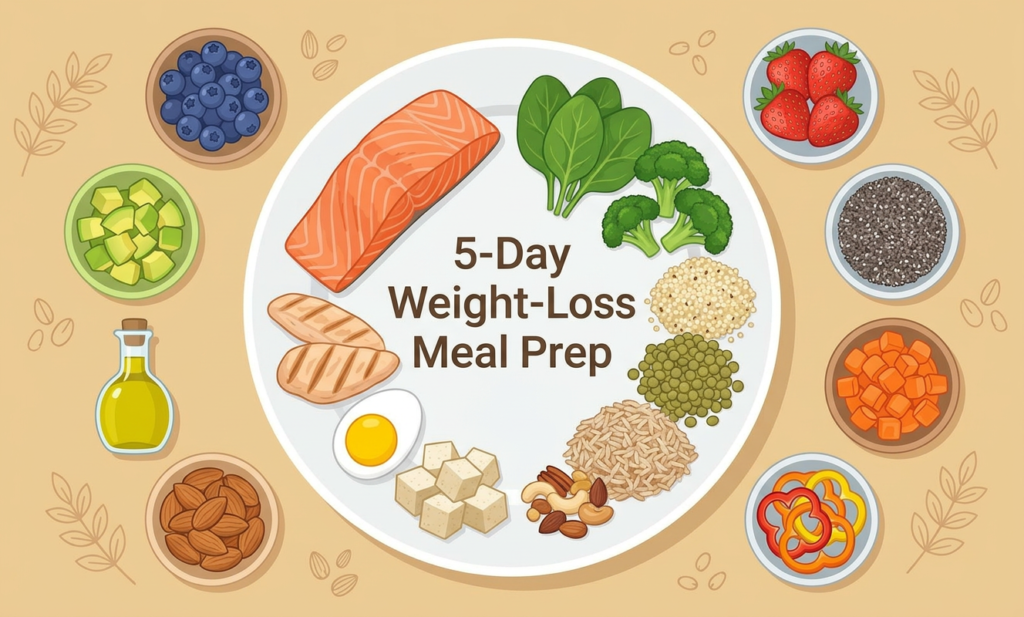
For American adults trying to lose weight, the biggest hurdle isn’t lack of motivation—it’s the collision between real life and rigid diets. A growing body of research shows that people who consistently plan meals, cook at home, and control portions are far more likely to maintain a healthier body weight over time than those who rely on fast food and processed snacks. The strategy that actually works is a structured, repeatable meal‑prep pattern—not a 7‑day miracle plan.
How Meal Prep Supports Healthy Weight Loss
Epidemiological studies indicate that regular home cooking is associated with lower intake of added sugars, refined carbohydrates, sodium, and calories, and with better long‑term weight outcomes. When you prepare meals in advance, you shift decision‑making to a calm, low‑stress time so you’re less likely to reach for high‑calorie convenience foods when you’re tired, rushed, or emotionally overwhelmed. The goal is consistency: a pattern you can repeat for months, not a short‑term “challenge.”
Core Principles of a 5‑Day Plan
For a 5‑day structure, aim for three main meals and optionally one small snack per day, with attention to:
- Protein: 20–30 grams per main meal to support satiety and muscle preservation (e.g., chicken, turkey, fish, eggs, Greek yogurt, tofu, beans).
- Fiber‑rich carbohydrates: Vegetables, legumes, whole grains, and modest fruit to keep blood sugar more stable and support gut health.
- Healthy fats: Moderate amounts from olive oil, avocado, nuts, and seeds to support metabolic and cardiovascular health.
This framework aligns broadly with recommendations from major U.S. health‑guidance documents, which emphasize varied whole foods, portion control, and reduced ultra‑processed intakes rather than a single “magic” food.
Example 5‑Day Meal Pattern (Adaptable to Your Kitchen)
Each day below is a template, not a prescription. Swap proteins and vegetables based on seasonal availability and personal preference, keeping the same structure.
Day 1 – Balanced protein start
- Breakfast: Plain Greek yogurt with mixed berries and a small handful of almonds.
- Lunch: Grilled chicken or tuna salad with mixed greens, cherry tomatoes, cucumber, and olive‑oil‑based dressing.
- Dinner: Baked salmon with roasted broccoli and a small portion of quinoa or brown rice.
Day 2 – Plant‑forward day
- Breakfast: Oatmeal with chia seeds and sliced banana.
- Lunch: Lentil‑floret salad with spinach, shredded carrots, red onion, and lemon‑vinaigrette.
- Dinner: Tofu or tempeh stir‑fry with bell peppers, snap peas, and brown rice.
Day 3 – Family‑style, low‑prep
- Breakfast: Scrambled or boiled eggs with sautéed spinach and a slice of whole‑grain toast.
- Lunch: Lean turkey or chicken sliced over romaine with tomatoes and a light vinaigrette.
- Dinner: Lean ground beef or turkey with black beans, corn, tomato‑salsa topping, and a small portion of brown rice or whole‑grain pasta.
Day 4 – Low‑effort, high‑satiety
- Breakfast: Cottage cheese with sliced peaches and a small portion of walnuts.
- Lunch: Chicken‑or‑tofu quinoa bowl with chopped kale, cherry tomatoes, and a light dressing.
- Dinner: Baked cod or white fish with steamed green beans and a small sweet potato.
Day 5 – “Clean‑out‑the‑fridge” day
- Use leftover cooked grains, proteins, and vegetables to build a salad, grain bowl, or whole‑grain wrap.
- Keep dressings and spreads light: olive oil, lemon, mustard, or mashed avocado rather than creamy, high‑calorie sauces.
Smart Snack Strategies
If you choose to include a snack, pick one that combines protein, fiber, or healthy fat:
- A piece of fruit with a tablespoon of peanut or almond butter.
- A small handful of unsalted nuts.
- Carrot sticks or sliced bell peppers with 2–3 tablespoons of hummus.
These patterns are designed to provide energy between meals without significantly expanding your daily calorie budget.
Practical, Busy‑Friendly Prep Workflow
- Time block: Dedicate 2–3 hours on one weekend day (e.g., Sunday evening) to chop vegetables, cook grains, portion proteins, and assemble a few full meals.
- Containers: Use airtight, portion‑sized containers and label with day and meal (e.g., “Day 1 Lunch – Chicken Salad”).
- Freezing: Freeze extra portions of soups, stews, or cooked grains for later weeks to maintain momentum when you’re short on time.
- Flexibility: Allow one “unplanned” meal or meal‑out per week to reduce all‑or‑nothing thinking; strict perfectionism increases stress, which can interfere with long‑term adherence.
When to Involve a Health Professional
This is a general lifestyle pattern, not individualized medical treatment. If you have diabetes, cardiovascular disease, kidney disease, or are on medications that affect weight, blood sugar, or electrolytes, discuss any significant dietary changes with a clinician or registered dietitian. They can help you tailor calorie targets, sodium limits, and carbohydrate choices based on your labs, medications, and personal goals.
Source: