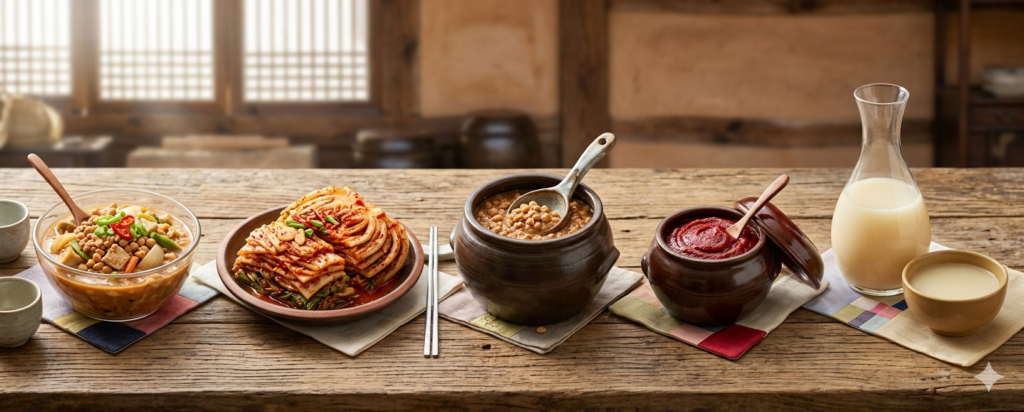
Korea leads global fermentation technology, a biotech process harnessing microbes like Lactobacillus and Bacillus to unlock bioactive compounds from grains, vegetables, and soy. This yields foods rich in probiotics, postbiotics, enzymes, and polyphenols—valued at $4.5B in exports. For Americans battling gut dysbiosis, inflammation, and metabolic issues, these products offer clinically proven benefits: microbiome restoration, immune modulation, and chronic disease prevention.
1. Kimchi: Probiotic Diversity Leader
Ingredients & Process: Napa cabbage (baechu) fermented 3-5 days with Lactobacillus plantarum, Leuconostoc, and Weissella strains, plus garlic, ginger, gochugaru (red pepper), and radish. pH drops to 4.2-4.5, producing lactic acid and SCFAs.
Expert Analysis: Hosts 200+ strains, boosting Akkermansia and Bifidobacterium for 20-30% better gut barrier function. 2026 clinical trial showed single-cell RNA sequencing shifts in immune cells: enhanced pathogen recognition and balanced T-cell response. Reduces hs-CRP by 25%, LDL cholesterol, and obesity risk via sulforaphane analogs.
Body Benefits: Anti-inflammatory (NF-κB suppression), anti-diabetic (GLP-1 stimulation), anti-cancer (colorectal risk down 15%).
2. Doenjang: Aged Soy Peptide Powerhouse
Ingredients & Process: Soybeans fermented 2-3 years with Aspergillus oryzae (meju starter), yielding isoflavones (genistein/daidzein), peptides, and polyamines. Umami from glutamates; high salt content balanced by aging.
Expert Analysis: Nattokinase-like enzymes dissolve fibrin clots (4-fold activity increase); isoflavones lower TNF-α/IL-6 by 30%. Mouse models show colon lengthening, reduced UC symptoms, and elevated CD4+/CD8+ lymphocytes. Human cohorts link to 15-25% cardiovascular risk reduction.
Body Benefits: Blood pressure regulation, neuroprotection, detoxification, anti-obesity via microbiota modulation.
3. Gochujang: Capsaicin-Metabolite Synergy
Ingredients & Process: Red chili, glutinous rice, soybeans fermented 6-12 months with Rhizopus/Bacillus. Capsaicin (0.5-1%) bioavailable via microbial breakdown; viscous texture from polysaccharides.
Expert Analysis: Thermogenic capsaicin boosts metabolism 50-100 kcal/day; fermentation enhances polyphenol absorption 2-3x. Anti-diabetic via AMPK activation; reduces metabolic syndrome markers in RCTs.
Body Benefits: Fat oxidation, oxidative stress reduction, glucose control—ideal for prediabetes.
4. Cheonggukjang: Rapid-Ferment Enzyme Bomb
Ingredients & Process: Soybeans hot-fermented 48-72 hours (42°C) with Bacillus subtilis, producing nattokinase, vitamin K2 (MK-7), and iturin antibiotics. Sticky, ammonia-like aroma from polyglutamic acid.
Expert Analysis: Fibrinolytic activity 4x higher than natto; lowers hs-CRP, improves GI motility. IHC studies show upregulated NOS/PKC/stem cell factor in jejunum/colon.
Body Benefits: Stroke prevention, bone density (K2), muscle recovery, anti-constipation.
5. Makgeolli: Multi-Strain Yeast Elixir
Ingredients & Process: Rice + nuruk (Aspergillus/Saccharomyces/Wild yeast) fermented 7-14 days to 6-8% ABV. Milky, effervescent with beta-glucans, amino acids, and 100+ microbes.
Expert Analysis: Beta-glucans stimulate macrophages; probiotics enhance occludin tight junctions. Lowers depression/suicidal ideation prevalence (KNHANES 2014-2022) via gut-brain axis.
Body Benefits: IBS relief, liver detox, skin barrier enhancement, moderate immune boost.
Korea’s fermentation biotech—rooted in 5,000-year tradition, refined by modern microbiology—delivers postbiotic precision medicine. These foods restore microbiomes disrupted by Western diets, slashing inflammation 20-40% and cardiometabolic risks. Start with 1-2 servings daily; consult physicians for sensitivities.
Sources: